Full disclosure right up front: we make chocolate. Kasama is a bean-to-bar chocolate maker on Granville Island, so we’re not a neutral guide — but we taste everything, we know this scene from the inside, and Vancouver’s chocolate community is genuinely collaborative. Here’s our honest map of it.
Vancouver is quietly a great chocolate city
For a city its size, Vancouver punches far above its weight in chocolate. There’s a dense cluster of makers and chocolatiers here, a dedicated Hot Chocolate Festival every winter, and — rarer than you’d think — several places where chocolate is made from raw cacao beans, not melted from imported blocks. Whether you’re a visitor with an afternoon to spend or a local building a tasting habit, there’s a route for you.
First, know the difference: chocolate makers vs. chocolatiers
The distinction that unlocks the whole scene: a chocolate maker starts with raw cacao beans — roasting, cracking, grinding and refining them into chocolate from scratch. A chocolatier starts with finished chocolate (couverture) and transforms it into bonbons, truffles and confections. Neither is better; they’re different crafts. Chocolatiers are about artistry in shape and filling; bean-to-bar makers are about coaxing flavour out of the bean itself, the way winemakers work with grapes. Vancouver is lucky enough to have both.
The bean-to-bar corner
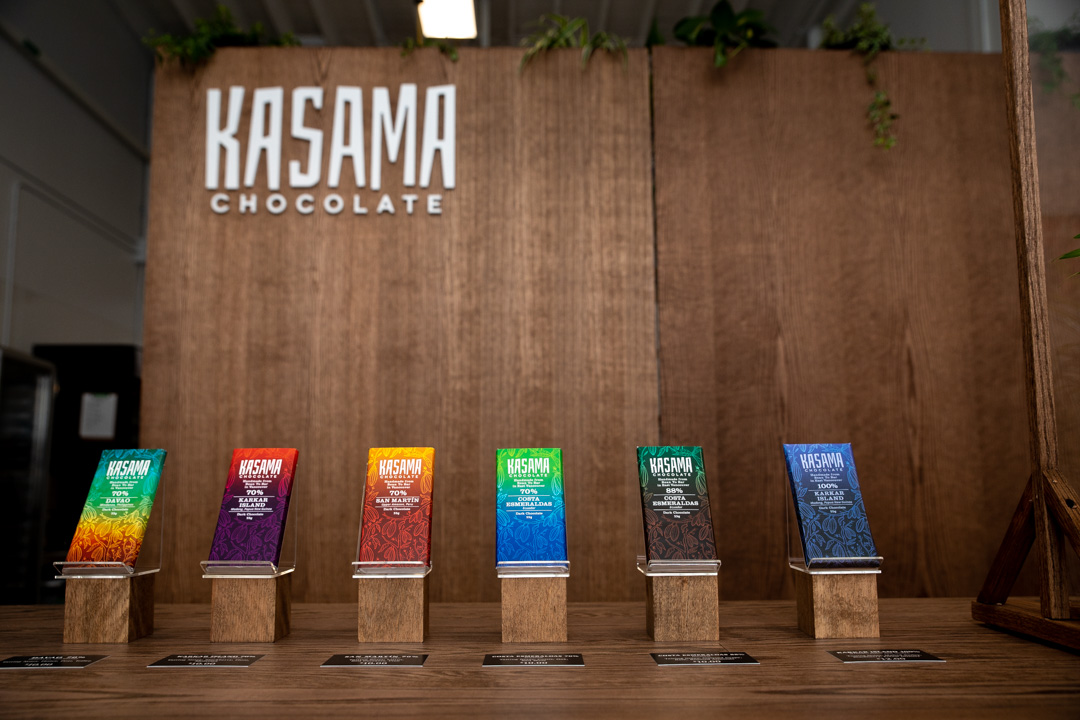
Kasama Chocolate (Granville Island) — that’s us, so judge accordingly. We’ve been making chocolate from scratch since 2015, starting with cacao from a family farm in the Philippines, and our bars have won more than 100 International Chocolate Awards medals — including Gold and Best in Category at the 2026 Canadian competition for our Strawberry White. You can watch bars being made at our workshop and shop at 2-1244 Cartwright St, or book the Sunday chocolate tour and tasting to taste through origins from the Philippines, Peru, Ecuador, Uganda and beyond.
We’re not the only ones who work from the bean, either — a couple of the chocolatiers below grind their own cacao too, and we love that the club keeps growing.
The chocolatiers
Thomas Haas (North Vancouver & Kitsilano) — the OG of Vancouver fine chocolate: immaculate bonbons, legendary double-baked almond croissants, and a haute-patisserie standard the whole city measures itself against.
Temper Chocolate & Pastry (Dundarave, West Vancouver) — chef Steven Hodge’s European-style chocolate and pastry shop; worth the drive over the bridge for the bonbons alone.
BETA5 (East Vancouver) — polygon-shaped bonbons and inventive cream puffs from a studio that treats chocolate like design; their seasonal flavour collections are some of the most fun (and most photographed) in the city.
Koko Monk (Kitsilano) — pastry chef Paul Dincer’s wonderfully strange flavour laboratory: think blue cheese, curry-coconut and candied pear, in chocolate made from raw cacao beans — one of the few other shops in town that starts from the bean. The hot chocolate has an international cult following.
Crimp and Crumb — jewel-like artisan bonbons made in small batches; find them online and at local markets around the city.
Drunken Chocolatier — exactly what it sounds like, done properly: boozy, liquor-infused chocolates with real craft behind them.
Coconama (North Vancouver) — Japanese-inspired chocolates with delicate flavours like yuzu and matcha, plus hot chocolate that’s earned international praise. Their Coco-Labo line is made bean-to-bar from organic cacao — a lovely second string.
Living Lotus — plant-based, unroasted chocolate confections with a zero-waste ethos — proof that vegan chocolate can be a destination rather than a compromise.
Zimt Chocolates (Chinatown) — Vancouver’s dedicated vegan chocolate house: organic, dairy-free chocolate you’ll also spot on shelves all over the city.
Cocoa West Chocolatier (Bowen Island) — organic chocolates worth building a ferry day-trip around.
Learn your chocolate
The Good Chocolatier (Kitsilano) — organic, fairly traded chocolate from a social enterprise creating inclusive employment for neurodiverse adults — plus some of the city’s best hands-on chocolate-making workshops.
The Science of Chocolate — guided tastings and chocolate classes from one of Vancouver’s resident chocolate educators.
And that’s not the whole list — the scene runs deeper, which is exactly the point: you can eat very well here for a long time before repeating yourself.
If you only have one afternoon: Granville Island
We’re biased, but the island earns it: a working chocolate factory (ours) where you can taste bars made metres away, the Public Market’s food stalls, artisan studios, and the seawall when you need to walk off the sugar. Sundays add the chocolate tour and tasting at 10am — 40–50 minutes from raw cacao to award-winning bars. If you can’t make it in person, we ship across Canada.
Time it right: the Hot Chocolate Festival
Every winter (mid-January to mid-February), dozens of Vancouver cafés, chocolatiers and makers — us included — create one-off hot chocolate flavours for the YVR Hot Chocolate Festival, with proceeds supporting local charities. It’s the single best few weeks of the year to taste the whole scene in one delicious sweep.
Frequently asked questions
What’s the best chocolate in Vancouver?
Honestly: it depends what you’re after. For bars made from the bean, seek out the city’s bean-to-bar makers (we’d love to be your first stop). For bonbons and patisserie, the chocolatiers above set the standard. For drinking chocolate, winter’s festival is your tasting flight.
Where can I watch chocolate being made in Vancouver?
Our Granville Island workshop is a working bean-to-bar factory with a shop in front — and the Sunday tour and tasting walks you through the whole process, beans to bars.
Is there a chocolate festival in Vancouver?
Yes — the annual YVR Hot Chocolate Festival runs mid-January to mid-February across dozens of venues citywide.
What makes bean-to-bar chocolate different?
It’s made from scratch, starting with raw cacao beans, so the flavour of the origin — the terroir — comes through in the bar. Just as importantly, the maker shapes how those flavours come to life at every step: how the beans are roasted, how finely they’re ground, how long the chocolate is conched. Same bean, different maker, different bar — that’s the craft. Here’s how the process works, step by step.