“Bean-to-bar” is printed on a lot of chocolate wrappers these days. Sometimes it means exactly what it says. Sometimes it’s just a nice-sounding phrase. We’ve been making chocolate from raw cacao beans on Granville Island since 2015, so here’s our plain-language take on what the term means, why it matters, and how to tell the real thing from the marketing.
What “bean-to-bar” actually means
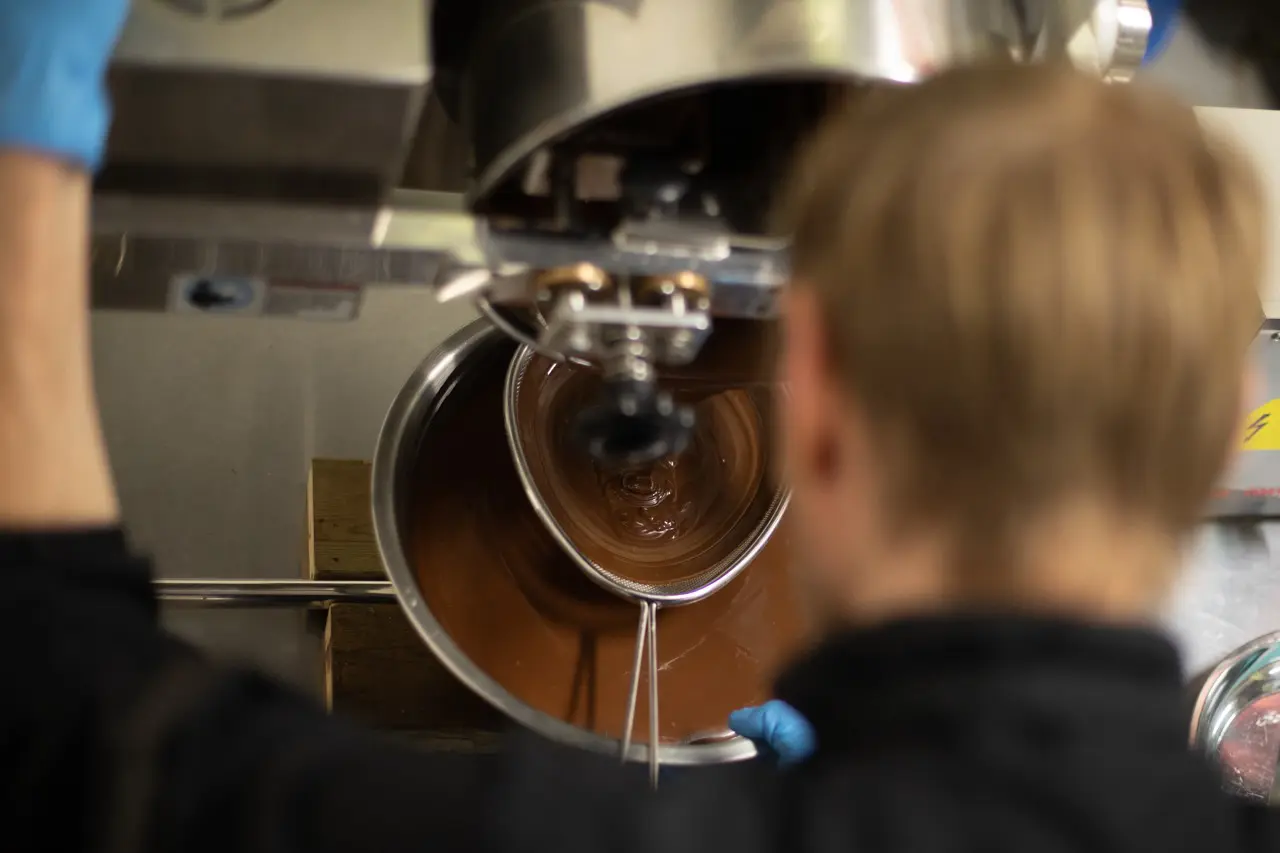
A bean-to-bar chocolate maker starts with raw cacao beans and does every step in-house: sorting, roasting, cracking, winnowing (removing the shells), grinding, refining, tempering and moulding. The same people who roast the beans pour the finished bars.
Most chocolate isn’t made that way. The vast majority of brands, including many lovely chocolatiers, buy pre-made chocolate called couverture, melt it down, and turn it into bars, bonbons and truffles. That’s a real craft, but it’s a different one. If you want the long version of every step, we walk through it on our Bean to Bar page.
Why it matters (beyond the label)
Flavour. Cacao beans vary as much as wine grapes or coffee beans. Genetics, soil, climate and especially fermentation all change the flavour. Someone who controls the roast and the grind can bring out what’s special about a particular bean, whether that’s bright and citrusy, earthy, or fudgy. Mass-market chocolate usually blends beans and roasts them hard so every bar tastes the same.
A shorter supply chain. Buying beans directly lets makers know where their cacao comes from and who grew it, and often lets them work with farmers directly. Kasama started this way: our first batch was made from beans grown on family land in the Cagayan Valley in the northern Philippines. You can read that story in Filipino Chocolate, Made in Vancouver.
Fewer ingredients. Because the maker controls the recipe from the start, a bean-to-bar dark chocolate often contains little more than cacao and sugar, and sometimes extra cacao butter.
How to spot real bean-to-bar chocolate
There’s no official certification for “bean-to-bar”, so a little detective work helps. Here’s what we look for when we shop:
- A named origin. A specific country, region or even farm (like “Costa Esmeraldas, Ecuador” or “Tupi, Philippines”) is a good sign. “Dark chocolate” with no origin usually means a blended couverture.
- A short ingredient list. For dark chocolate: cacao beans (or cocoa mass), sugar, maybe cocoa butter. A long list of emulsifiers and flavourings usually points to industrial chocolate.
- “Made by” versus “made in”. “Handcrafted” or “small batch” doesn’t tell you whether the maker started from the bean. If the brand talks about roasting, winnowing or conching, they probably do.
- Visible equipment. In a bean-to-bar shop you’ll often see (and smell) roasters and stone grinders. At our Granville Island shop, the workshop is right behind the counter.
- Just ask. Bean-to-bar makers love talking about their beans. If you ask “where are these beans from and how long did you roast them?”, you’ll get a real answer.
For more on the difference between chocolate makers and chocolatiers, and where to find both in the city, see A Local’s Guide to Chocolate in Vancouver.
What bean-to-bar looks like at Kasama
Every Kasama bar is made from scratch at our workshop at 2-1244 Cartwright St on Granville Island. A few details from our process:
- We hand-sort every batch of beans before roasting to pull out broken or flat ones.
- We roast in a coffee roaster, which lets us fine-tune the roast profile for each origin.
- Our winnower was built in-house by Dom and his dad, after months of separating shells from nibs with a bowl and a hair dryer (and finding cacao shells in our hair).
- We grind and conch in stone melangers, granite wheels on a stone slab, often for 72 hours or more, until the chocolate is smooth and the harsh edges have mellowed out.
Alongside our Philippine cacao, we have made single-origin chocolate from Peru, Ecuador, Uganda, Fiji, Taiwan, Thailand and more. Tasting two origins side by side, like our 70% Costa Esmeraldas from Ecuador and our 70% Kisinga from Uganda, is the quickest way to understand why bean-to-bar matters. Same percentage, very different chocolate.
Where to taste bean-to-bar chocolate in Vancouver
- Visit the shop on Granville Island. Come by, taste, and see where the chocolate is made.
- Join a Chocolate Tour & Tasting. It’s 40–50 minutes inside the workshop, with raw and roasted cacao to smell, drinking chocolate to sip, and award-winning bars to taste, in a small group of up to 10. We pause tours from October to December during our peak production season, so check our workshops page for dates or email hello@kasamachocolate.com to plan a visit in the new year.
- Order online. We ship across Canada, with free shipping in BC on orders over $60. See chocolate delivery for details.
Bean-to-bar FAQ
Is bean-to-bar chocolate healthier?
Not automatically. It’s still chocolate. But bean-to-bar bars tend to have shorter ingredient lists, usually without added flavourings or emulsifiers.
Why does bean-to-bar chocolate cost more?
Specialty beans cost more, batches are small, and every step is done by hand or on small machines. Our conching alone often runs three days.
Is bean-to-bar the same as single origin?
No, though they often go together. “Single origin” means the beans come from one place. “Bean-to-bar” describes who makes the chocolate. Many of our bars are both.
Can I buy Vancouver-made bean-to-bar chocolate online?
Yes. Shop our chocolate and we’ll ship it anywhere in Canada, or pick it up free at our Granville Island shop.